What Nobody Tells You About Corner Kicks
Defending corner kicks effectively requires a coordinated system, not simply tall players standing near the goalkeeper. FIFA World Cup Qatar 2022 showed why: 19% of all non-penalty, non-own goals came...

What Nobody Tells You About Corner Kicks
Defending corner kicks effectively requires a coordinated system, not simply tall players standing near the goalkeeper. FIFA World Cup Qatar 2022 showed why: 19% of all non-penalty, non-own goals came from set pieces, while approximately 1 in 35 corners produced a goal. The most reliable approach is usually hybrid defending, combining zonal protection around the six-yard box with man-to-man assignments and one or two players positioned for second balls. Teams must also decide whether to defend the posts, leave a counterattacking outlet, or bring all ten outfield players behind the ball. Stadium View’s football analysis focuses on the tactical details that shape these decisions across FIFA World Cup matches and modern professional football. The practical recommendation is simple: establish fixed responsibilities before the match, attack the delivery point rather than waiting under it, and rehearse the first clearance plus the second phase.
Imagine the corner flag, the penalty area packed with bodies, and one badly judged step turning a routine defensive moment into a goal you will replay in your head until retirement. That is the emotional mathematics of corner defending: the average chance may be relatively small, but the consequence is enormous, especially late in a knockout match.

Photo by K on Pexels
The Bottom Line
The safest answer to “how to defend corner kicks” is to use a clearly rehearsed hybrid system: protect the most dangerous zones with zonal defenders, assign direct markers to the opponent’s best aerial threats, and nominate players to attack the first ball and control the edge of the area. Pure zonal defending can protect the six-yard box, but it may be vulnerable to aggressive runs. Pure man-to-man marking can deny shots, yet one lost duel or blocked defender may collapse the whole structure. Hybrid defending accepts that every system has a failure probability and tries to reduce the largest risks.
According to the FIFA Training Centre, most teams at Qatar 2022 used a mixture of zonal marking, player-to-player assignments and edge players. That consistency matters. A team should not invent a new arrangement five minutes before kickoff because an assistant coach suddenly develops tactical confidence after watching one corner on television.
A practical defensive setup
A common structure includes:
- One defender protecting the near-post zone.
- Two or three players covering central six-yard-box areas.
- A taller defender protecting the far-post channel.
- Man-markers attached to the opponent’s strongest headers.
- One or two edge players prepared for rebounds and cutbacks.
- A counterattacking outlet if the match situation allows it.
The exact numbers depend on the opponent, goalkeeper and scoreline. However, every player must know whether their primary duty is space, opponent, ball flight or transition. Confusion is not a tactical philosophy; it is merely confusion wearing a tracksuit.
What Players Actually See When Defending a Corner
Players see a moving problem rather than a static set piece: the ball can travel toward the near post, far post, penalty spot or edge of the box, while attackers screen, block and change direction. Effective corner defending therefore depends on scanning the kicker, the assigned opponent, the goalkeeper and the second-ball area before the delivery. The first decision is usually made before contact with the ball.
From the defender’s viewpoint, the most dangerous attacker is not always the tallest one. A shorter player arriving at speed can generate more heading power than a stationary centre-back, because momentum converts into force at the point of contact. This is why the front line of a zonal system must disrupt runs before attackers enter the protected zone. The International Football Association Board Laws of the Game define the corner kick as a restart from the corner area, but the defensive challenge begins earlier, during organization and communication.
Goalkeepers also need a realistic operating zone. If the goalkeeper can confidently claim deliveries inside the six-yard box, defenders may hold slightly deeper positions. If the goalkeeper prefers to stay on the line, central defenders must attack the ball earlier. Listen up — this is the part that matters: a defensive system cannot be evaluated without including goalkeeper behavior. A perfect zonal diagram is useless if nobody attacks the cross.
Zonal defending: protect the space
Zonal marking assigns defenders to areas rather than individual attackers. The primary advantages are structural stability, strong protection close to goal and clearer access to clearances. A dense group between the goal line and penalty spot can make clean shots difficult because attackers have less room to generate power.
Its weaknesses are equally important:
- Attackers can create separation by dragging zonal defenders away.
- A poorly protected front zone allows runners to arrive at speed.
- Short corners can move the defensive block before the main delivery.
- Too many players near goal may weaken the counterattack.
- A clearance that travels only to the edge of the box may restart the danger.
A useful coaching detail is to make zonal players face both the ball and the incoming runner. Completely turning toward the kicker makes the defender blind to movement; completely following a runner can open the zone. The best body position is usually half-turned, with short adjustment steps and a clear line to the anticipated contact point.
[Internal Link: advanced set-piece defending tactics]
Want to compare defensive structures with tournament examples? Stadium View tracks the tactical patterns behind major FIFA World Cup matches.
Man-to-man marking: deny the finish
Man-to-man defending gives each defender a primary opponent to track. Its purpose is direct: prevent a specific attacker from reaching the ball with a free run or uncontested jump. This method can work especially well against teams that rely on one dominant target, such as a powerful centre-back attacking the far post.
The danger is that marking creates a series of individual probability contests. If one defender loses a duel, the goalkeeper may face a close-range header. Attackers can also block, screen or cross paths, making assignments unclear. A sensible man-marking rule is to defend the opponent’s movement first and avoid wrestling before the ball arrives; early grabbing may produce a foul or penalty, while ball-watching can produce an even worse outcome.
Hybrid defending: the practical compromise
Hybrid defending combines fixed zones with selected man-markers. For example, four defenders may guard the near-post, central and far-post areas while three players track the opposition’s strongest aerial threats. Additional players cover the edge of the penalty area and the short-corner option.
This approach is popular because it separates responsibilities. Zonal defenders protect the goal’s most valuable spaces, while man-markers reduce the freedom of elite headers. FIFA’s Qatar 2022 observations showed that hybrid organization was more common than a simple all-zone or all-man structure, supporting the view that professional teams prefer risk distribution over tactical purity.
The 3 Things That Matter Most
The three decisive factors in corner-kick defending are first contact, communication and second-ball control. A team that wins the initial aerial duel but concedes the rebound has only solved half the problem. Likewise, a perfectly assigned marker is irrelevant if nobody calls the screen, runner or short-corner movement. Defensive success is therefore a sequence: organize, compete, clear and reset.
1. Attack the ball
Defenders should move toward the delivery point whenever possible rather than waiting underneath the ball. Attacking the ball improves heading power, interrupts the attacker’s run and reduces the chance of being pinned near the goal line. The clearance should ideally travel wide or beyond the penalty area, not straight upward into the same crowd.
The correct technique depends on the delivery:
- Near-post inswingers require an explosive first step.
- Far-post crosses demand awareness of blind-side runners.
- Out-swingers often favor defenders who can attack the ball while facing forward.
- Driven crosses may require a block, touch or controlled clearance rather than a spectacular header.
- Short corners require immediate communication between the nearest defender and the edge player.
One under-discussed point is clearance direction. A defender who heads the ball centrally may technically win the duel but still increase expected danger because the attacking team retains possession around the penalty spot. Coaches should grade clearances by outcome, not by theatricality. The heroic leap is nice; the ball in Row Z is nicer.
2. Communicate with precise commands
“Mark up” is too vague to be useful when ten players are moving. Effective teams use short, predefined commands such as “short,” “front,” “screen,” “step,” “keeper,” and “out.” The goalkeeper usually has the best view of the whole picture, but central defenders must also lead because they can physically see the runs developing in front of them.
Communication should occur in three phases:
- Before the kick: confirm zones, markers and the short-corner defender.
- During the run-up: identify screens, changes and late arrivals.
- After first contact: call “out,” “second,” or “reset” to organize the next action.
A useful training measurement is not only whether the team concedes a goal. Coaches should record whether the call arrived early enough, whether the marker knew the assignment and whether the first clearance reached a safe area. This produces better information than judging an entire session from one dramatic mistake.
3. Control the second phase
Approximately 70 to 80 percent of corner routines do not end with the first aerial contact deciding the play, because the ball may be flicked on, blocked, headed across goal or recovered at the edge. The second phase is where many defenses fail. Players relax after the initial clearance, attackers recycle possession, and suddenly the same danger returns with everyone slightly more tired and significantly more annoyed.
Edge players should scan for:
- Cutbacks from the corner area.
- Recycled crosses from the opposite flank.
- Shots from outside the penalty area.
- Loose balls near the penalty spot.
- Offside traps after a clearance.
- Immediate counterattacking lanes.
A contrarian but useful recommendation is to leave one technically reliable outlet higher up the field when the match state allows it. At Qatar 2022, only six of 32 teams consistently left a player higher up the pitch while defending corners, while 26 teams brought all ten outfield players back. Bringing everyone back maximizes immediate defensive numbers, but it also increases the probability of a second attack because there is no outlet to make the opponent retreat.
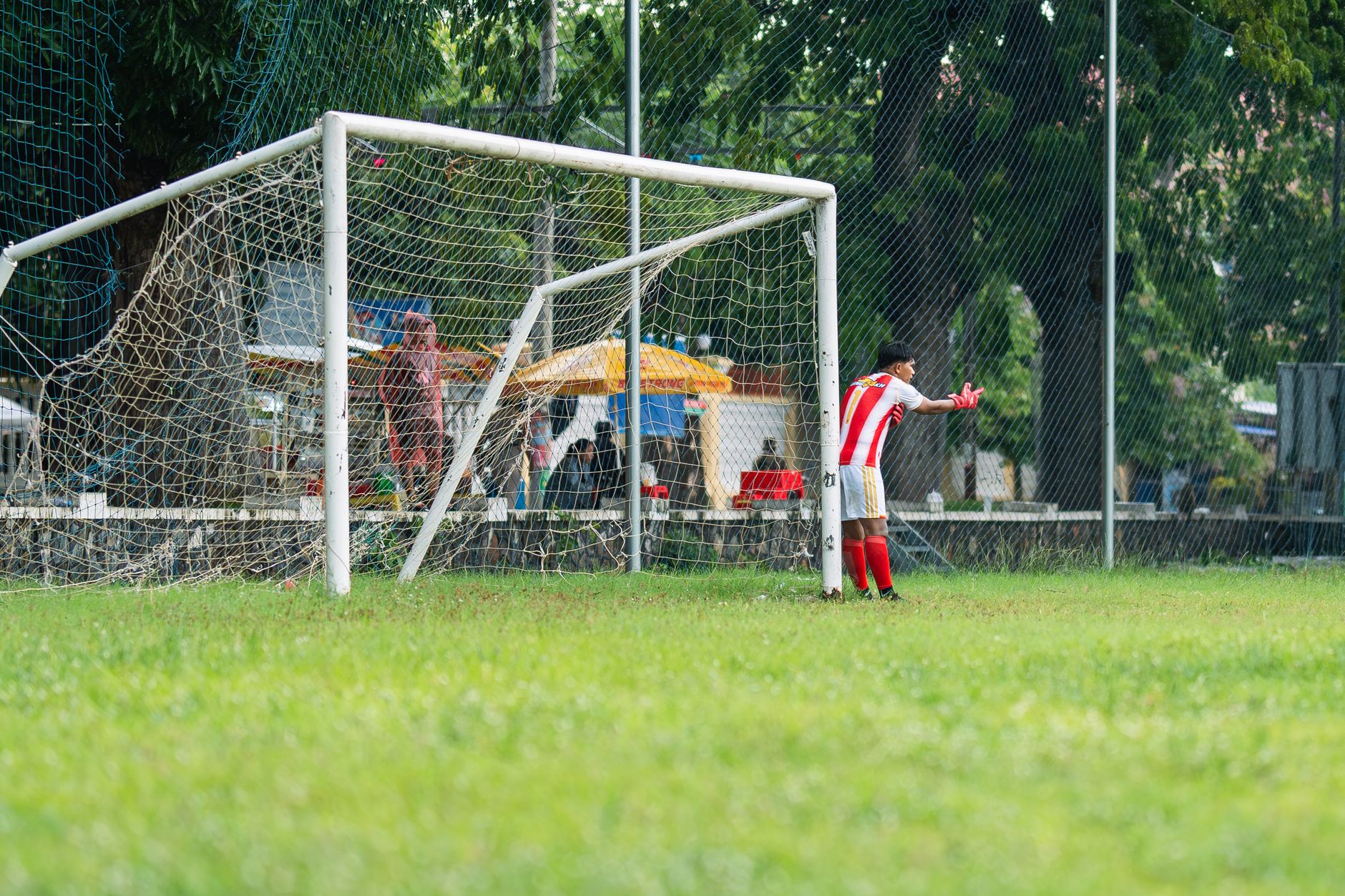
Photo by Sinan KRIYA on Pexels
What Are the Edge Cases and Gotchas?
The most dangerous corner-kick failures occur in edge cases: short corners, blocked runs, goalkeeper uncertainty, late substitutions, rebounds and scoreline-driven decisions. These situations expose whether a team understands principles or has merely memorized starting positions. The solution is to assign a response for each exception before the match, especially against opponents known for rehearsed routines.
Short corners
A short corner changes the geometry immediately. The nearest defender must close the receiver without being eliminated by a simple wall pass, while a second defender protects the inside passing lane. If the first defender charges too aggressively, the attackers may play around them; if they retreat too far, the cross arrives without pressure.
The team should decide whether to:
- Send one player to press and keep the zonal line intact.
- Send two players and rotate the nearest zone.
- Stay compact and allow a controlled cross.
- Push the line outward after the ball travels away from the flag.
The answer depends on distance, opponent quality and match state. A one-goal lead in the 88th minute may justify conservative containment, while a team needing a win may accept greater transition risk.
Screens and legal blocks
Attackers often use legal positioning to obstruct a defender’s path without making obvious contact. Defenders must avoid becoming obsessed with wrestling because that can create penalties and destroy their ability to track the ball. The better response is to anticipate the screen, move around it early and maintain a line of sight to the delivery.
The UEFA Training Ground emphasizes that set-piece preparation combines technical execution with coordinated movement and timing. That principle applies defensively: a defender should not wait for the screen to make contact before reacting. By then, the expected value of the contest has already deteriorated.
Goalkeeper uncertainty
If a goalkeeper calls for the ball, defenders should clear a path rather than competing with their own goalkeeper. If no call comes, the nearest defender must attack the delivery. Teams should rehearse both scenarios because real corners are noisy, crowded and often played in hostile stadiums such as Estadio Azteca, Wembley Stadium or Lusail Stadium.
A practical observation from match analysis is that goalkeeper indecision often causes more damage than a lack of height. A smaller goalkeeper with a decisive starting position can reduce danger; a taller goalkeeper who starts, stops and retreats may create chaos. That is not an insult to height. It is simply probability refusing to be impressed by a wingspan.
Substitutions and fatigue
Late substitutions create a specific risk because a new defender may not know the corner assignments. The captain or goalkeeper should immediately explain the new player’s role using one sentence, not a tactical lecture. For example: “You cover the far-post zone; do not follow anyone outside it.”
Fatigue also changes the quality of defensive movement. In extra time, players may lose half a second in their reaction, which is enough for a runner to gain a step. Coaches should therefore simplify responsibilities late in matches rather than adding elaborate rotations. The best emergency system is the one tired players can still remember.
To study opponent patterns before making a prediction, review Stadium View’s match-by-match tactical coverage.
The post question
Whether to place a defender on the post depends on the goalkeeper, defensive shape and opponent’s delivery profile. At Qatar 2022, only five of the 32 participating teams used a player on at least one post as a regular feature. This suggests that many elite teams preferred to keep additional defenders active inside the area rather than sacrifice one player to guard the goal line.
Post defenders can prevent direct goals from flick-ons and protect areas the goalkeeper cannot reach. However, they may also become spectators if the ball is cleared normally, while reducing the number of players available to attack the cross. The decision should be based on evidence from the opponent’s corner routines, not tradition.
[Internal Link: corner-kick marking systems]
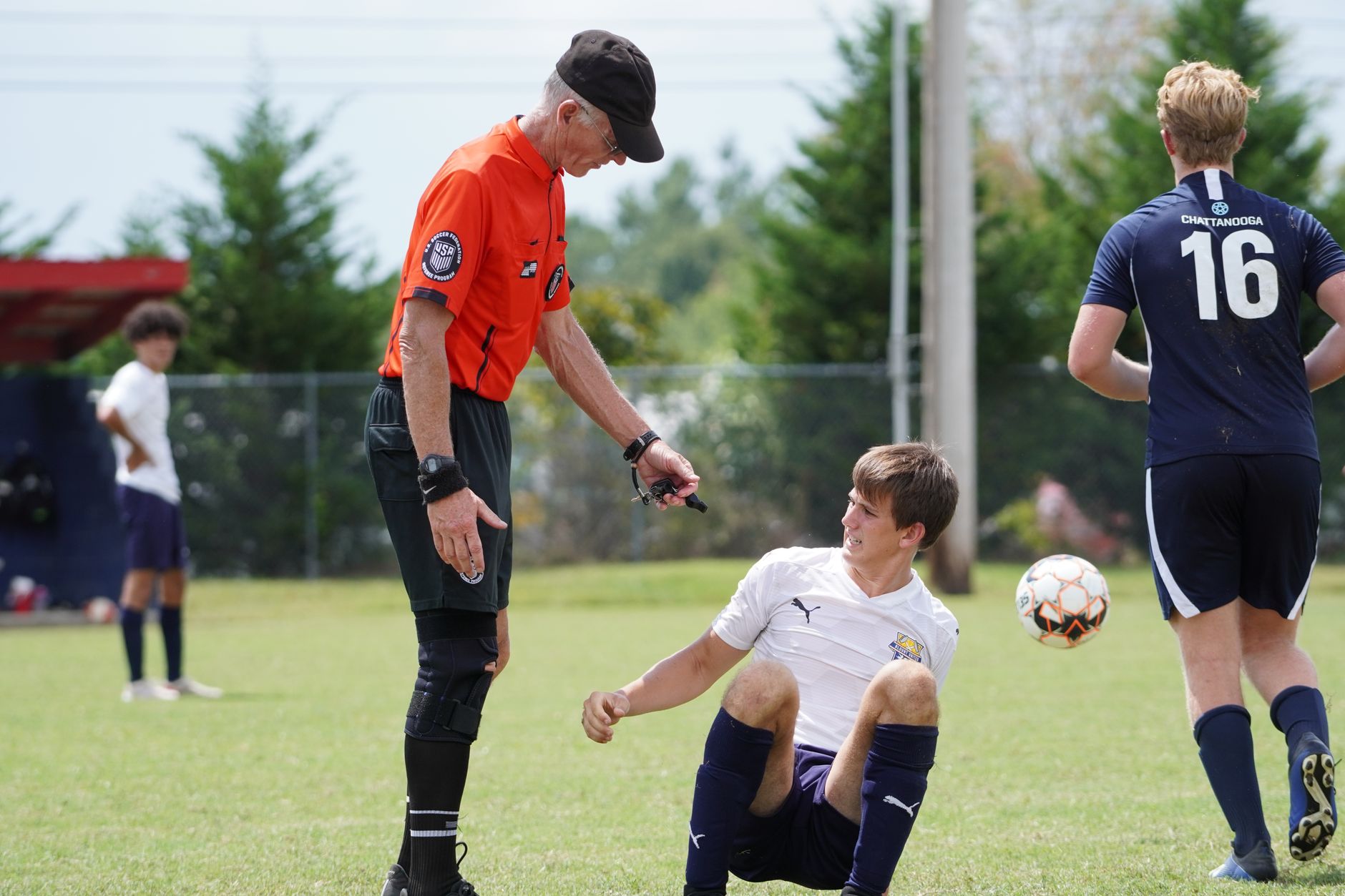
Photo by Chris L on Pexels
The Verdict
The best way to defend corner kicks is not to choose a fashionable system; it is to build a repeatable one that matches your players. Hybrid defending usually offers the strongest balance because it protects critical zones while limiting the freedom of dangerous attackers. The essential sequence is clear: organize early, communicate specific instructions, attack the delivery, clear away from central danger and react immediately to the second ball.
The most important tactical decision is often not zonal versus man-to-man. It is whether every defender knows exactly what happens after the first contact. A team that wins the first header but loses the rebound has reduced one risk while leaving the main calculation unfinished. As the FIFA Training Centre notes through its set-piece analysis, modern teams increasingly dedicate serious preparation to these moments because small improvements can influence decisive matches.
For coaches, the recommended training progression is:
- Rehearse the base defensive shape without opposition.
- Add realistic attacking runs and screens.
- Introduce short-corner variations.
- Demand a controlled first clearance.
- Continue the drill until the second phase is resolved.
- Review communication, not only goals conceded.
The final recommendation is unglamorous but powerful: assign responsibility before the corner is taken. Nobody should be discovering their role while an opponent is already sprinting toward the near post.
Ready to follow sharper football analysis and World Cup tactical insights?
Frequently Asked Questions
Q: What is the best way to defend corner kicks?
A: The best general approach is a rehearsed hybrid system combining zonal coverage, man-to-man marking and edge-of-box protection. Zonal defenders protect the near post, central six-yard-box and far-post areas, while selected markers track the opponent’s strongest aerial threats. The team must also assign a player to challenge short corners and others to control rebounds. The exact structure should reflect goalkeeper preference, defender height and the opponent’s delivery patterns.
Q: How do you defend a corner kick step by step?
A: First, organize the defensive shape and identify the main markers before the kick is taken. Second, track runners while protecting the assigned zone, then attack the ball at its highest and safest contact point. Third, clear toward the touchline or beyond the penalty area, followed by an immediate reaction to the second ball. Finally, push out or counterattack only after possession is secure.
Q: What is the difference between zonal and man-to-man corner defending?
A: Zonal defending assigns players to areas, while man-to-man defending assigns players to specific opponents. Zonal systems generally provide stronger protection of the six-yard box and make clearances more predictable, but they can be manipulated by timed runs. Man-to-man systems directly restrict dangerous headers but depend heavily on winning individual duels and avoiding screens. Hybrid defending combines both methods.
Q: Why does a corner-kick defense fail even after winning the first header?
A: Corner defenses often fail because the first clearance is weak or the team loses concentration during the second phase. A header directed toward the penalty spot may technically end the first duel but leave the attacker with a clear recovery opportunity. Edge players must track rebounds, recycled crosses and shots from outside the box. Training should continue after the first contact rather than stopping the drill immediately.
Q: Should a defender stand on the goalpost during a corner?
A: A defender should stand on the post only when the team’s tactical analysis shows that the extra goal-line protection outweighs losing another active defender. At Qatar 2022, only five of 32 teams regularly used a player on at least one post, indicating that it is not an automatic requirement. The decision should consider goalkeeper reach, delivery type, opponent routines and whether flick-ons frequently threaten the goal.
Q: How many players should defend a corner kick?
A: Many teams use between eight and ten outfield players in defensive positions, depending on the scoreline and counterattacking plan. FIFA’s Qatar 2022 analysis found that 26 of 32 teams brought all ten outfield players back, while only six left a higher outlet. More defenders near goal reduce immediate space, but keeping one outlet may improve transition security and force the opponent to retain defensive cover.
Q: What should a team do against a short corner?
A: The nearest defender should close the receiver while protecting the inside passing lane, and a second defender should be ready to prevent an easy wall pass. The rest of the defense must rotate without abandoning the near-post and central zones. Teams should decide in advance whether to press with one player, press with two or contain the short routine, because hesitation gives the attacking team time to improve the angle.
Thank you for reading.
Stadium View · Editorial Archive · No. 01